
Your air conditioner relies on refrigerant to pull heat out of your home and dump it outside. When refrigerant leaks out, your AC loses cooling power gradually. Most people don't notice until their system barely works on the hottest day of the year, which is exactly when you need it most. The good news is that refrigerant leaks usually show warning signs weeks or even months before your AC fails completely. If you know what to look for, you can catch the problem early and avoid a breakdown in the middle of summer in Conroe.
Listen for a Hissing Sound
A refrigerant leak often makes a hissing noise coming from your indoor unit or the outdoor condenser. It is not a loud sound. You have to listen carefully, especially when the system is running. The hissing comes from refrigerant escaping under pressure through a crack or hole in the copper lines that connect your indoor and outdoor units. If you hear it, turn off your system and call a technician. Do not ignore it hoping it will go away. The leak will only get worse.
Check Your Refrigerant Lines Outside
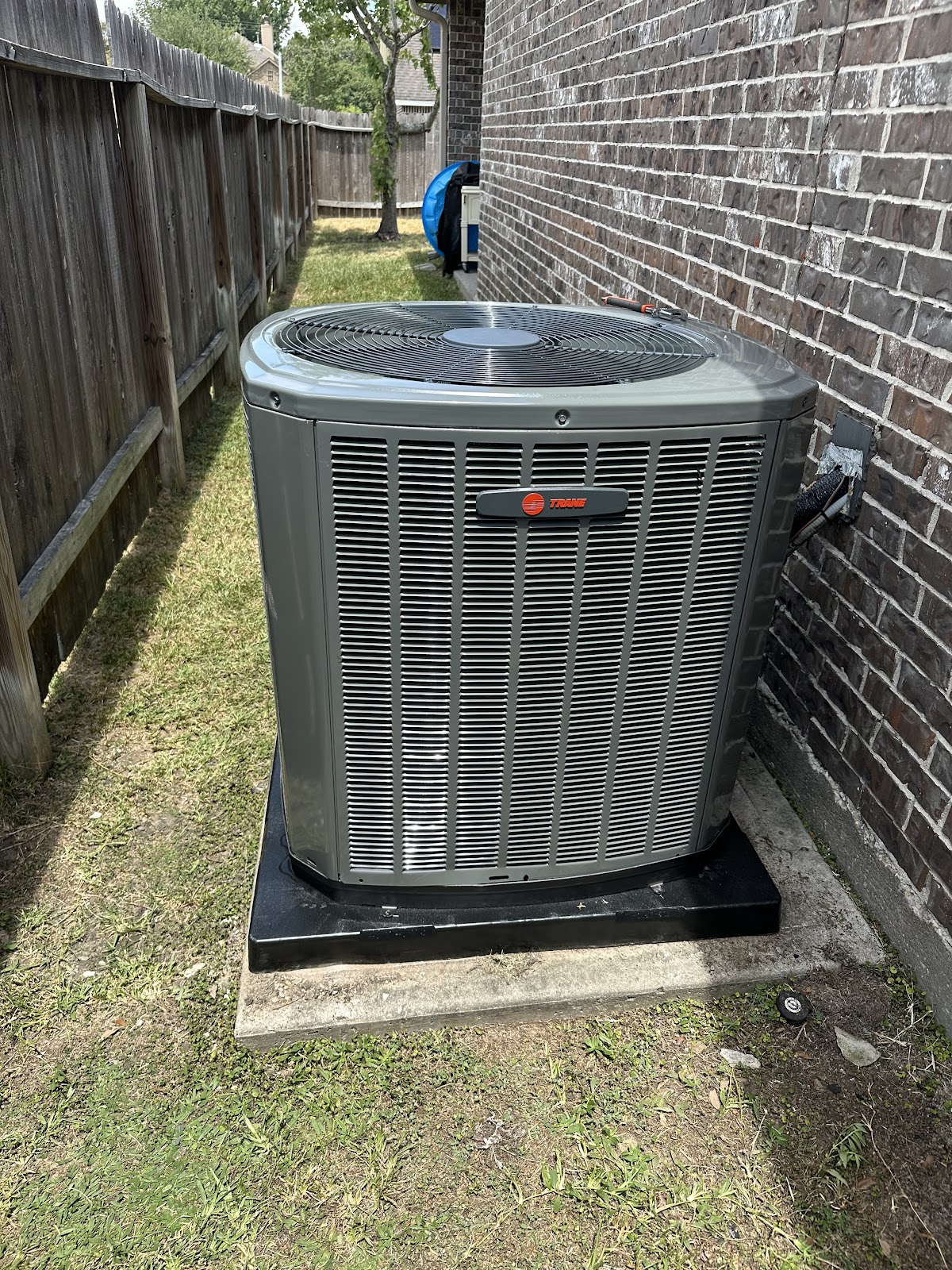
Walk around your outdoor condenser unit and look at the copper tubing running from it back toward your house. These lines should be dry and clean. If you see a greasy or oily film coating the copper, that is a sign of a refrigerant leak. The refrigerant carries oil through the system to lubricate the compressor. When refrigerant escapes, some of that oil comes out with it and leaves a visible residue. This is one of the most reliable early warning signs. A little bit of residue on a small section of pipe means the leak is still small and caught early.
Watch for Reduced Cooling Power
Your AC will cool less effectively as refrigerant leaks out. You might notice that your bedroom stays warmer than the living room, or that it takes longer to reach your thermostat setting. Some rooms might feel almost normal while others fall behind. This uneven cooling happens because your system is struggling to move enough cold air through the ducts. If you are adjusting your thermostat lower every few days and still not getting comfortable, a refrigerant leak is a strong possibility. Do not wait for complete failure. Call Air Tech of Conroe for a diagnosis.
Look for Ice on the Indoor Coil
Pop off the cover panel on your indoor unit if you can access it safely, or look through the return air vent. The evaporator coil inside should be wet with condensation but not frozen solid. If you see ice buildup on the coil or the refrigerant lines, that is a sign of low refrigerant. This happens because without enough refrigerant, the remaining liquid evaporates so quickly that the coil temperature drops below freezing. Ice formation reduces airflow and makes your system work harder. Eventually the ice can damage the compressor. If you see ice, shut the system off and call a technician the same day.
Watch Your Electric Bill
A slow refrigerant leak does not always cause dramatic cooling loss right away. Sometimes your AC just works harder to achieve the same cooling, and that extra work shows up in your electric bill. If your cooling costs jump 10 to 15 percent without a big change in your thermostat settings or outdoor temperatures, something is wrong. A refrigerant leak is one of the most common causes. Your system is burning more electricity to move less cold air, which is wasteful and unsustainable. A technician can confirm the leak and repair it before your bills climb even higher.
Act Fast When You Find a Leak
Refrigerant leaks do not seal themselves. The longer you wait, the more refrigerant escapes and the more damage you risk to your compressor. A small leak caught early might cost a few hundred dollars to repair. A leak that goes undetected for months can result in compressor failure, which means replacing the entire outdoor unit at a cost of several thousand dollars. In Conroe's heat, your AC is essential. Do not gamble on a leak fixing itself.
Air Tech of Conroe is here to inspect your system, locate any leaks, and repair them properly. Call us today to schedule a refrigerant check.